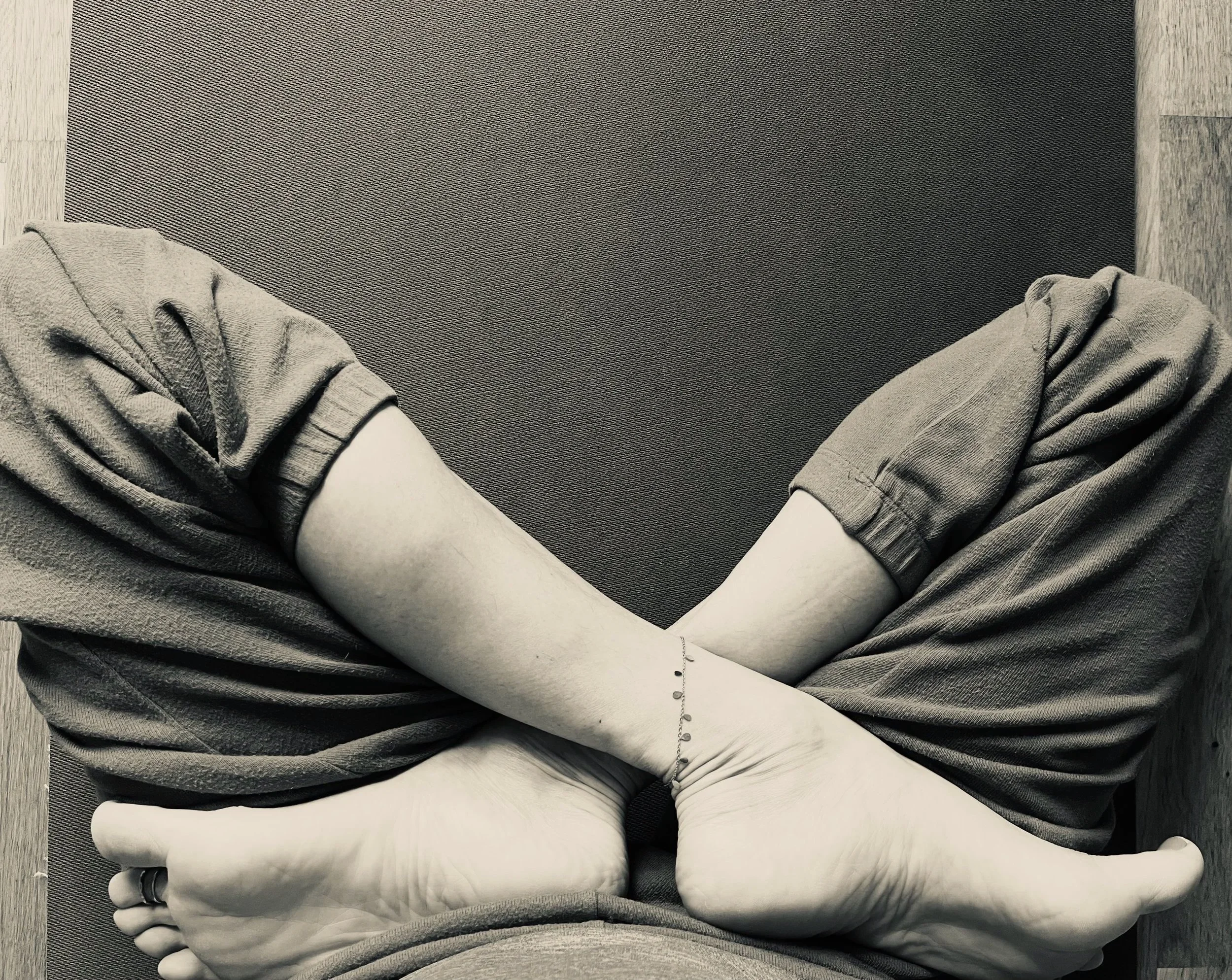
Why Your Hips Feel Tight and How to Improve Mobility
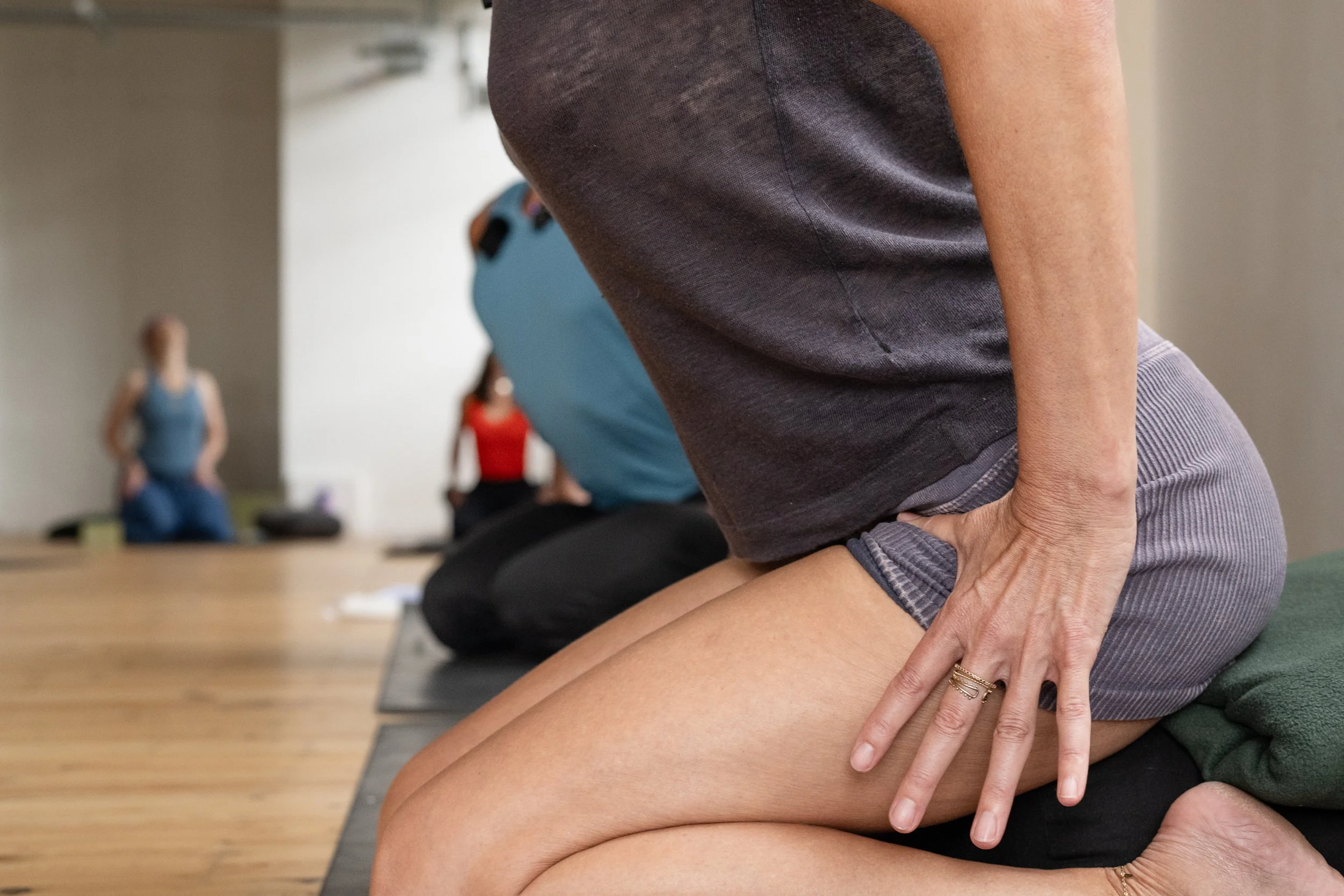
Why Your Hips Feel Tight and How to Move Freely
Hips can often feel tight before we even begin to move.
An underlying resistance. A dull ache or a sense of limitation.
But this feeling does not always mean what we think it means.
In many cases, the body is not lacking range.
It is regulating it.
The Hips as a Centre of Movement, Stability and Wisdom
Long before we consciously understand movement, the body does already.
There is something deeply intelligent residing within the hips and pelvis. They are not only centres of mobility, but centres of organisation - physically, energetically, and developmentally.
As toddlers, we instinctively explore this intelligence. We wiggle, twist, wobble and sway, not just as random play, but as ways of learning how to move and express in the world. When toddlers rock through their hips, shift their weight, wiggle, dance and spiral, they are not just playing.
They are building the foundations of movement.
Developing balance and coordination.
Linking the upper and lower body through the centre.
Refining their sense of where they are in space.
This is where we first learn how to mobilise and stabilise.
How to adapt.
How to move with confidence.
And this learning does not happen by isolating muscles.
It happens through the integration of the whole system.
The hips and pelvis are the meeting place where movement, balance and awareness begin to organise themselves.
A centre through which the whole body learns to relate to gravity, to space, and to itself.
In yoga, the pelvis is associated with the grounding intelligence of the root centre of embodiment: mūlādhāra, The place where stability, support and connection to the life is felt. In qigong, the lower dāntián, at the level of pelvis and lower abdomen, is understood as a reservoir of energy and organisation, a place from which balance and movement are cultivated.
In both traditions, the centre of the body is understood as a place where steadiness grows towards freedom.
This is not simply philosophy.
It is something we experience in movement.
Why Tightness Is Not Always a Flexibility Problem
Over time though, the space we give to moving and playing in life decreases, and so the natural intelligence within our body can become quieter and less heard. Stress, habit, injury, and repetitive patterns begin to shape how freely the hips move and respond.
What once moved with spontaneity begins to move with caution.
The sensation of tightness can be strong, but sensation does not always reflect structural restriction.
Tightness is what we feel.
Stiffness is a measurable quality of the muscle.
And these two do not always match up. Research in movement science and pain perception shows that muscles can feel tight even when they are not structurally shortened. Often, the nervous system is adjusting muscular tone as a protective response, limiting movement to maintain a sense of safety.
The body is not simply mechanical.
It is perceptive and protective.
This is why two people can do the same practice and experience very different results. One may become more mobile and flexible, while another makes little to no mobility gains.
Part of this is biological. Genetics influence tissue elasticity, hormones such as oestrogen levels affect collagen density, but perhaps more significantly life experiences shape how the body responds, and how safe it feels to move.
However, these factors are not the end point - they do not define potential.
How Stress and Habit Shape Hip Mobility
The body is always adapting.
To lifestyle. To stress. To demand. To what it is repeatedly exposed to.
Long periods of sitting reduce variability of movement through the hips and pelvis. Studies suggest that sitting for more than four hours a day can reduce available range of motion by around 15%.
When movement options narrow, the body becomes efficient within those limited patterns.
Efficiency becomes habit.
Habit becomes restriction.
Stress adds another layer of adaptation. When the nervous system perceives stress, breath tightens, muscular tension intensifies, elevated cortisol levels increase collagen density in connective tissues, and movement becomes more guarded.
The system shifts toward protection and preparation.
Past injury can deepen this pattern. Even after tissues have repaired, the nervous system may continue to hold protective patterns, subtly restricting movement and staying alert to the possibility of re-injury.
The body remembers.
And responds accordingly, even when we think we have moved on.
The Relationship Between Feet, Hips and Spine
The hips do not move in isolation.
They are part of a wider conversation through the whole body.
The feet meet the ground and organise how force is absorbed and transferred. When the feet are less responsive through tight shoe wear, stiffness, weakness, or reduced awareness, this changes how the hips receive and share load.
The spine brings another dimension, shaping how movement is organised throughout the body. The pelvis sits at the centre of this relationship, balancing what comes from below with what moves above. Listening in both directions.
The chain is continuous.
The conversation is constant.
When the feet are responsive, the spine is adaptable, and the pelvis can communicate and coordinate between them, the whole system distributes effort and load more efficiently - allowing the hips to move with greater ease, support and power.
When this chain is restricted or disrupted, the hips often absorb what is not being shared, and that constant conversation becomes strained.
Breath, Psoas and Internal Support
There’s another quieter aspect beneath all of this too.
One that is often overlooked, but always present.
The movement of the breath.
And this movement of the breath is deeply connected to the hips and pelvis. The psoas muscle attaches to every lumbar vertebra and passes through the pelvis to insert at the top of the thigh. The diaphragm, our primary muscle of breathing, attaches along the lower ribs and to the upper three lumbar vertebrae. Where the psoas and diaphragm overlap, there is fascial continuity between them that creates an intimate anatomical relationship through which movement in one affects the other.
With each inhale and exhale, the diaphragm moves, creating subtle, but important shifts in pressure and tension through the deep core, the psoas, the spine, and the pelvis.
Natural movement flows and connects from within.
When the breath becomes restricted, shallow, held, or irregular, this internal movement diminishes. The system loses some of its natural rhythm, and the diaphragm may begin to hold tension, reducing its capacity to move freely.
The psoas often responds by increasing tension to help stabilise and protect, contributing to a sense of holding through the front of the hips.
Not as a fault,
but as support.
Over time, this pattern of bracing can create increased tension through the connective tissues of the abdomen and spine, contributing to stiffness, discomfort, and a heightened sense of protection in the body. The nervous system may begin to interpret this state as one of stress or threat.
When the breath deepens and the diaphragm regains its mobility, this gripping pattern can begin to soften. Pressure is redistributed, tension reduces, and the nervous system can begin to shift from protection toward regulation.
Enhancing hip mobility, then, is not only about stretching or external movement. It is about restoring internal rhythm and support - allowing the breath to move, the diaphragm to soften, the psoas to respond, and the whole system to reorganise from within.
Because when breath moves well,
movement moves well.
How to Restore and improve Hip Mobility Without Force
Listening, rather than pushing, sustains deep lasting change.
So, if tightness is often protective, any attempt to change it needs to recognise and work with that insight, as pushing range can reinforce the very response we are seeking to repattern.
The body resists pressure.
But responds to safety.
Slow, gentle, attentive movement supports the nervous system to recognise that movement is possible and safe. Staying within comfortable ranges, and noticing small changes, begins to rebuild trust, ease and strength.
Trust softens tightness and helps restore tone.
Tone supports movement.
Movement builds strength.
From here, range can begin to expand gradually. Not by forcing, but by exploring with awareness, and by adding small amounts of load, variation and direction - building strength within what is already available.
This is where mobility becomes purposeful, functional and usable.
Importantly, more stretching is not always the answer. Building strength and coordination within the existing range often leads to natural increases in flexibility and mobility. The body becomes more capable, and greater range emerges consequently.
The body adapts again.
And over time, the sensation of tightness can begin to shift.
Less something to overcome and fight.
More something to listen and respond to.

Closing Reflection
The experience of tight hips is rarely just about the muscle tissue. It carries traces of our history, habits, and perception, reflecting a wider relationship within the system as a whole.
The hips are more than joints that facilitate us to move through space. They are centres of wisdom, where balance, coordination and orientation first take shape in the body.
When we begin to listen here, we are really listening to a wider system - one that is constantly in communication with the breath, the nervous system, and our sense of safety in movement. When the nervous system feels safe, the body is more willing to soften unnecessary holding, explore range, and rediscover ease and mobility.
This sense of safety is not abstract. It is shaped through contact with the ground beneath us, through the responsiveness of the feet, and through our ongoing relationship with gravity. The body is always negotiating with the earth - receiving support, adjusting tone, and finding orientation through grounding.
From this place, movement is no longer something we impose. It becomes something we are in conversation with, that we can explore, enjoy and learn through.
If you’re new to this approach, begin here: Somatic Yoga Begins From Within
About the Author
Jean teaches yoga and somatic movement with a focus on awareness, breath and flow. Her work explores how embodied practice supports mobility, resilience and nervous system health.