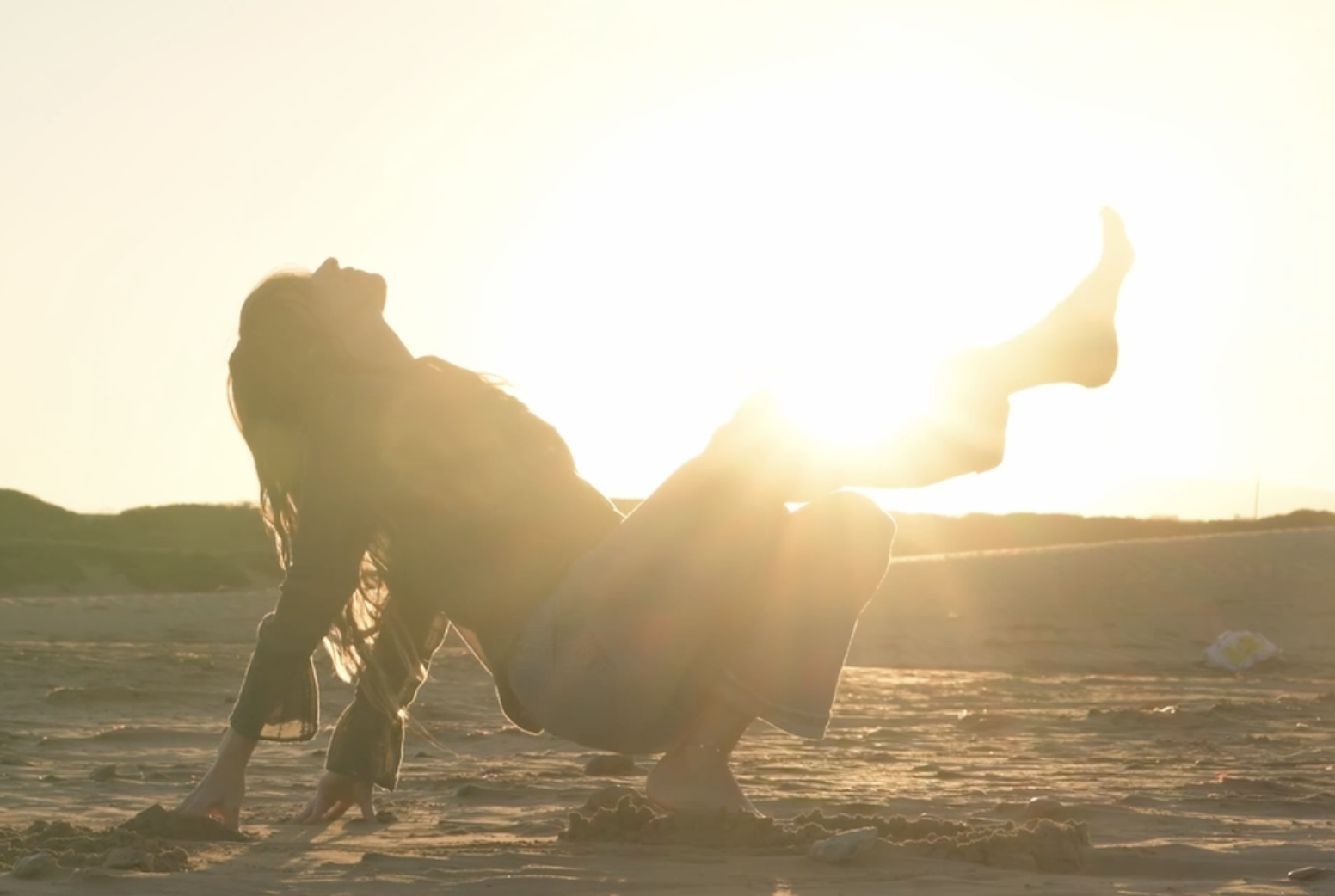
Your Body Already Knows the Way
Somatic Yoga Begins from Within
Over the past years there has been a gradual shift within contemporary yoga practice, towards attending not just to how we move, but to what we feel when we move. This is the heart of somatic yoga and movement practices, where discovery and learning arise through our own felt experience.
“Somatic” comes from the Greek root soma - meaning of the body. Somatic yoga supports a listening of the body, with all our sensory awareness, to attune and notice what is alive and breathing (or sometimes not breathing) beneath the skin… feeling the experience of any movement or moment of stillness we are in. Rather than imposing shape or performance from the outside, we begin to sense from within.
This isn’t something new layered onto yoga - it has always been - woven through the quieter threads of practice. When we slow down enough to notice, something begins to reorganize naturally. The inner noticing becomes a doorway, through which practice nurtures insight, personal growth and ease, guiding us back to our embodied sense of wholeness.
Over time three threads begin to reveal themselves again and again: awareness, movement and relationship.
Refine Awareness and Reclaim Choice
The nervous system is constantly sensing and responding.
At the heart of somatic practice is something beautifully simple. It describes a living loop: we perceive → we interpret → we respond. Every movement follows this pathway. Sensation arises. The nervous system interprets. A response follows. The somatic nervous system is as a river with two currents in continuous dialogue.
The sensory current flows inward, from the shores of the body, gathering information from skin, muscles, joints, and organs - sensing temperature, position, pressure, rhythm. It then delivers this information to the central nervous system. In return, the motor current flows outward - an answering tide moving from the central nervous system back to muscles and tissues, shaping our responses: to brace or soften, to reach or withdraw, to continue or pause. The quality of our response depends on the clarity of perception.
When perception is blurred - by stress, habit or distraction - responses can become excessive or muted. We may push beyond our limits or hold back unnecessarily. Over time, these patterns can become perpetual, creating persistent tension, fatigue or discomfort. As perception refines, response becomes more precise. Effort grows more economical. Movement feels less awkward or forced, and more coordinated and coherent. We become better informed from a deeper place of direct experience. And this is where choice returns.
In my work as a yoga teacher and somatic movement educator, this awareness of choice is central. We are not perceiving the body as something to control or fix. Instead we listen and make room for the body’s remembering - for reconnection, for new ways of moving and breathing, and for relating with greater coherence.
From Performance to Presence and Power
Modern life often pulls attention outwards and upward - into thinking, planning, producing and presenting. In that atmosphere, the body can become something we manage rather than something we inhabit. Somatic yoga reverses this. It invites us back into conversation with ourselves.
To begin this conversation, pause for a moment. Notice the breath. Sense contact with the ground. Ask quietly: what is here right now? What do I feel right now? If you are noticing, you are already practising somatic awareness.
Over time, this simple act of attending shifts the quality of everything. We may respond rather than react. We may recognise tension before it becomes strain. We may sense fatigue before it becomes depletion.
Strength becomes integrated rather than rigid. Flexibility becomes responsive rather than slack. Energy circulates rather than pooling or bracing. And we may feel a quiet reconnection to our own internal intelligence. This matters deeply, because: the relationship we have with ourselves shapes every other relationship we live.
When we trust our own signals, we move through the world differently.
Build Trust with Your Nervous System
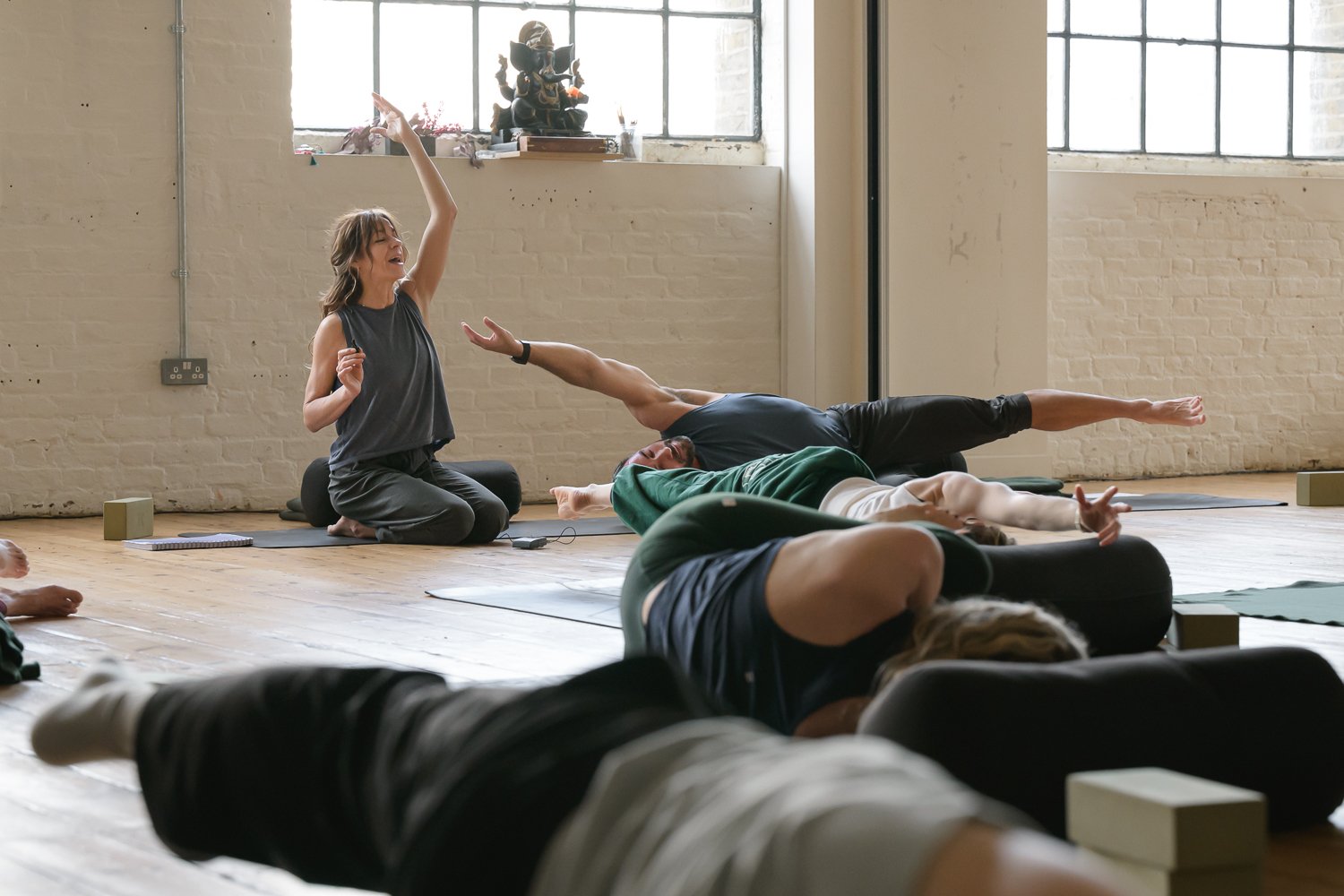
Understanding grows through experience. Reading about somatic yoga is like reading about the sea - informative, perhaps evocative - but never the same as entering the water itself and swimming. The most direct way to meet this work is to feel it in your own system. In my sessions, there is time and space to explore the inner terrain, with guidance that helps illuminate what can be difficult to perceive alone. A subtle shift of attention. An invitation to release holding. A reminder to root, to pause or to exhale..
Sessions are breath-led and unfold progressively, helping to develop fluency in sensation and supporting steadier nervous system regulation. The intention is not to manufacture dramatic forms (though they may emerge), but to nurture awareness, adaptability and choice. Participants often share that they move and breathe with greater ease. That long-held tension begins to soften. That strength feels more connected and less effortful. Small changes. Deep impact.
Explore the SOMATIC YOGA SERIES
This article introduces the foundations of somatic yoga: awareness, movement and relationship with the body. In the coming articles we will explore how these principles influence different aspects of practice and wellbeing.
Future topics include:
• Mobility, flexibility and functional movement in yoga
• Why hips often feel tight and how mobility improves
• How breathing shapes movement and energy
• Movement and nervous system regulation
• The vagus nerve, breath and parasympathetic balance
• Why slower movement can sometimes be more powerful
Each article explores how awareness and intelligent movement support resilience, mobility and wellbeing in everyday life.
Continue the Conversation
If this approach resonates, there is more to come. Future articles will explore how somatic movement relates to stress, tension, emotional regulation, strength and sustainable mobility - practical insights you can bring directly into daily life and work. You are invited to return, read, reflect - and most importantly - to move and feel.
Want to explore this in your own body?
I’ve created a short, guided practice of Inner Sensing to begin the conversation between perception and response. It’s suitable for everybody and if you’d like to try it you can receive it here:
About the Author
Jean teaches yoga and somatic movement with a focus on awareness, breath and flow. Her work explores how embodied practice supports mobility, resilience and nervous system health.